Changing Times, Transforming Neighbourhoods
Residential Transformation
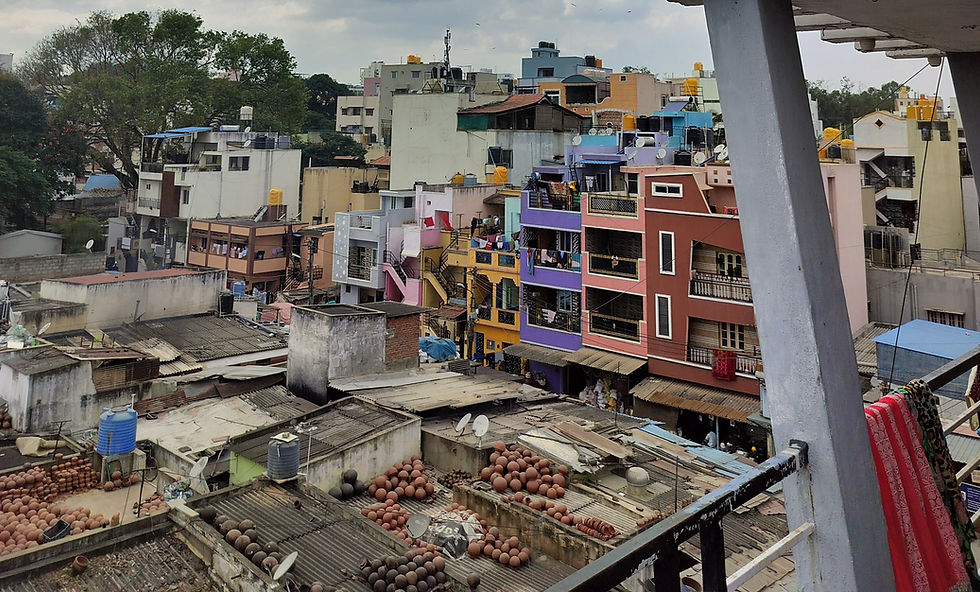
This section discusses the narratives of residential transformation in Pottery Town, Gandhi Gramam, and William’s Town as told by its residents. Based on our analysis, we have categorised residential transformation into two sub-sections. The first section discusses the link between the legality and security of housing and how it relates to people’s relationship to home. The second section talks about the incremental changes in housing and how changes in the built form have contributed to the forms of neighbourhood transformation in the area.
In both of these sections, we focus on the ways in which these factors influence and shape the living experience and the relationship residents share with the spaces around them.
For Social Identity, Legality of Housing and Relationship to Home
Potter Residents
The potter residents in the area reside in both private properties in Pottery Town and Gandhi Gramam and on the BBMP-leased land for potters where few use their workplaces as their residence.
“Hum iss land par saalo se kam kar rahe hai, tabhi to lease extend karne ka koshish kar rahe hai. But lease extension ka government ke sath fight shuru hai."
(Deepak, 45, Potter)
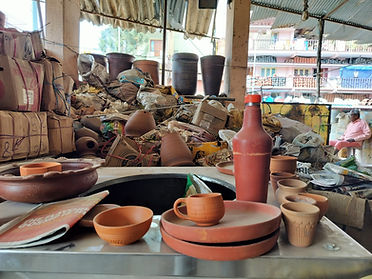
For the few potter residents residing within these workplaces, the lack of legal security around their 2008 expired leased contract has been a major source of concern for them. These potters face a threat of losing not just their workspaces but also homes.
“Ye jagah jayegi to humaara kam bhi jayega. Aur mujhe pottery ke alawa kuch nahi ata... I am the only potter in my family”
(Deepak, 45, Potter)
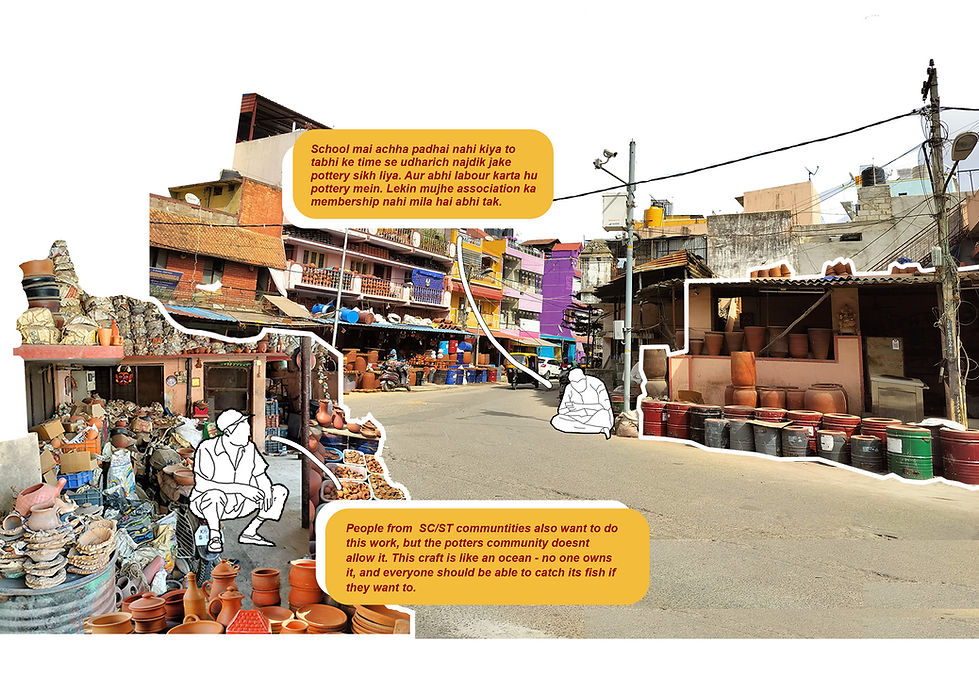
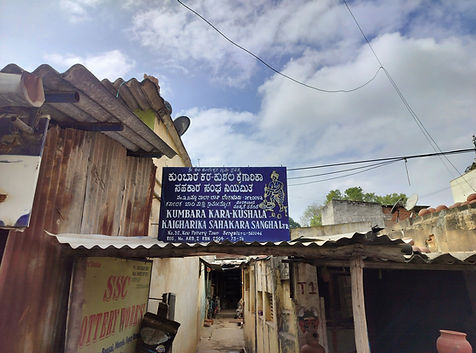
Over time, the number of original 40 potter families belonging to the Kumbhar Community have reduced by almost half and have moved on to work in other sectors. There have been new potters who have emerged in the locality coming from different identity groups like SC, ST and Muslim communities. These potters, who are very few in numbers, live in individual private homes in Pottery Town or in Gandhi Gramam. Most of these potters learnt pottery by growing up in the neighbourhood and picking up on the craft of pottery work over time.
These potters however are now facing forms of exclusion from the kumbhar community potters who consider them as “outsiders”. This has led these potters to make the plan to leave the place to sustain their work, even though they hold very strong connections and emotional ties to the neighbourhood which is also their birthplace.
Non-Potter Residents
Non-potter residents of Gandhi Gramam have a different scenario in place. The transition from holding a swadheen patra to a hakku patra to registering their homes has also been difficult for a few residents as the legal fees of doing the same goes up to Rs.2 lakhs, which is unaffordable for many of the low-income groups residing in this area.
"Registration ka kharcha jyada hai to bohot logo ne abhi tak karvaya nahi hai."
(Parvati, 48, Resident)
This has resulted in many residents being worried about legal security of their current homes which impacts the kind of relationship they share with their current residences, especially for those who have lived here for decades and have personal ties to their homes here. For some recent residents, housed in a SC/ST housing building built by BBMP in 2021, they continue to feel the uncertainty of tenureship and residence which is influenced by their personal trajectories.
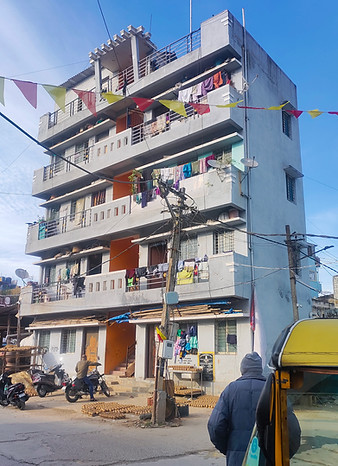
"Kiski muh se kya aaye, kya maloom. Bhagawan acha kare to hoga. Agar sabka ghar gaye to humaara bhi gaye. Chaar admi agar pani mein gaye, toh hum bhi dupki lagake mar jaye kya. Bhagwan jaisa kare waisa. Agar hoga bhi to sabka hoga. Chale jayenge hum”
(Mary, 71, Resident)
Incrementality and Changing Built Form
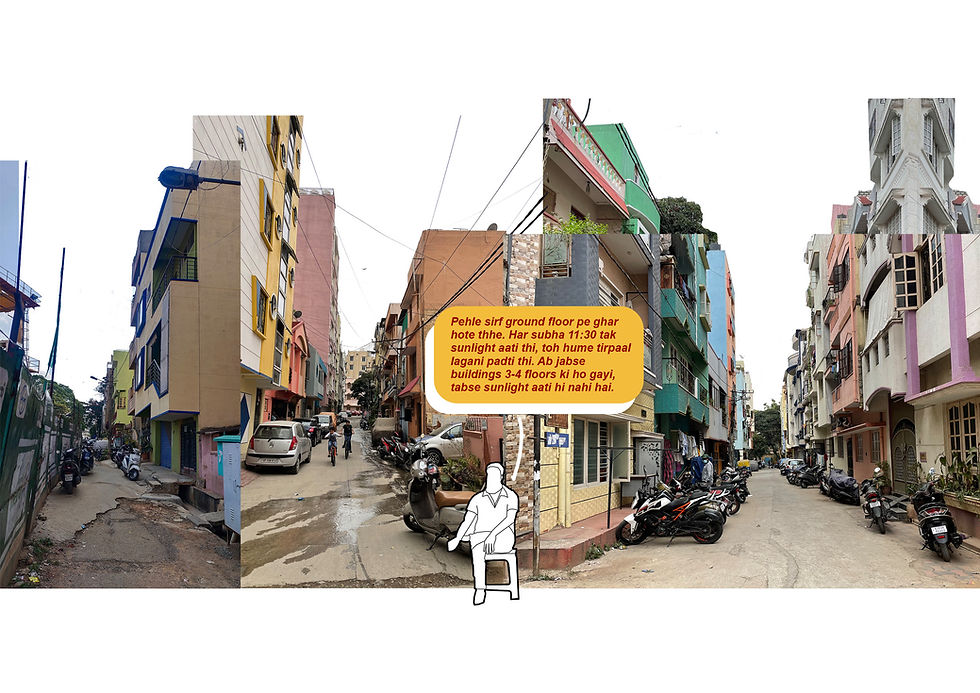
Across all the three sites, we saw that there has been a general trend in incremental changes in existing built forms and construction of new buildings like low to mid-rise residential buildings and religious structures around the area. Almost all of three sites that previously housed only ground floor structures have seen a change in the built form that now stands as G+2 or G+3 structures. According to residents, this change in housing typology has transformed the overall character of the neighbourhood over time.
Residents of Gandhi Gramam initially resided in ground-level kaccha hutments, which were set up on the originally assigned plots to them in 1992 which were then replaced by pucca structures built incrementally over time.
"Sabka pehle yaha patte ka jhopdi tha. Logon ne dheere dheere pakka ghar banaya."
(Phool Bano, 54, Resident)
“Ye hum log mehnat karke thoda thoda thoda karke. 12-13-11 saal pehle shuru kya. Ghar bane ko 12 saal ho gaya"
(Parvati, 48, Resident)
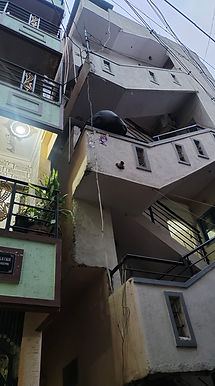
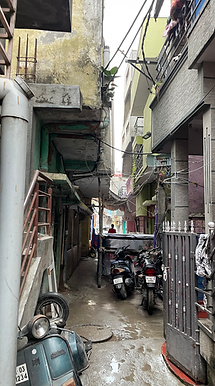
Beyond this, the subsequent floors of the houses were built incrementally and over a period of time by the residents themselves with the help of funds and aids provided by the government and slum board as well as personal loans, and support gotten from neighbours, family members, as well as religion based association and public figures functioning locally.
The residents of William’s Town and Pottery Town have similarly built more floors on their ground floor houses but have an added narrative of either renovating and modifying their existing structures, or demolishing and rebuilding their houses. According to the residents, this gradual shift has happened over a period of 30-40 years, transitioning from low-rise buildings to mid-rise buildings. This incremental expansion and modification of the houses, for several residents, has hence opened up the possibility of renting out parts of their homes.