Changing Times, Transforming Neighbourhoods
Transforming Relationship with Neighbourhood
This section discusses the kinds of physical changes that took place in the neighbourhood as the Pottery Town metro station construction started. These accounts build on what residents of the three sites told us about the transformation that took place in their immediate surroundings and how it impacted their day to day living and associated activities in the neighbourhood.
Loss of the Maidan (Playground)
Overall, what we found was there were a range of everyday activities and local amenities that the ground hosted which were directly impacted by the acquisition. The BBMP playground/maidan before the initiation of the metro was extensively used by a range of actors within the immediate community for several activities like playing, gathering, celebrating festivals, praying, blood donation camps and as a storage place by the potters community for the finished products.
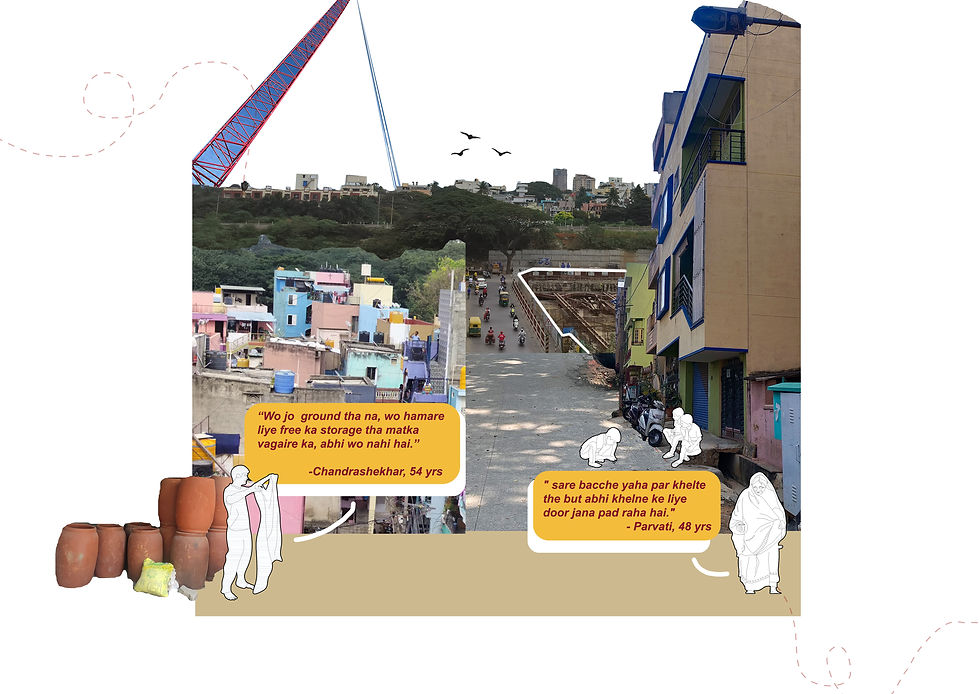
With the conception of the metro construction underground, all these activities came to a halt.
In our study, a lot of disappointment was expressed regarding this loss of ground due to the metro. It was a major spot for play both by the neighbourhood kids and the school children studying adjacent to the construction site. This led to loss of a local community space and children had to find other places in the nearby locality to continue with their play activities.
“Ground par hum log bohot social gathering karte the cricket ka bohot bada tournament hota tha yaha hamne bohot cricket celebrities (Dravid etc), actors (Chiranjivi etc) invite karte the, blood donation camp, political gathering hota tha."
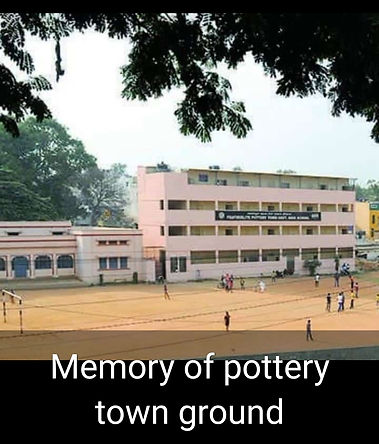
(Mohan, 47, Social Worker)
“We lost space of storing the pottery."
(Reshma, 24, Potter)
“Woh ground hamare liye free ka space tha humara matka wagerah rakhane ke liye."
(Chandrashekhar, 54, Potter)
(Photo shared by Mohan, 47, Social Worker)
"Saare bacche yaha par khelte the lekin abhi khelne ke liye door jana pad raha hai."
(Parvati, 48, Resident)
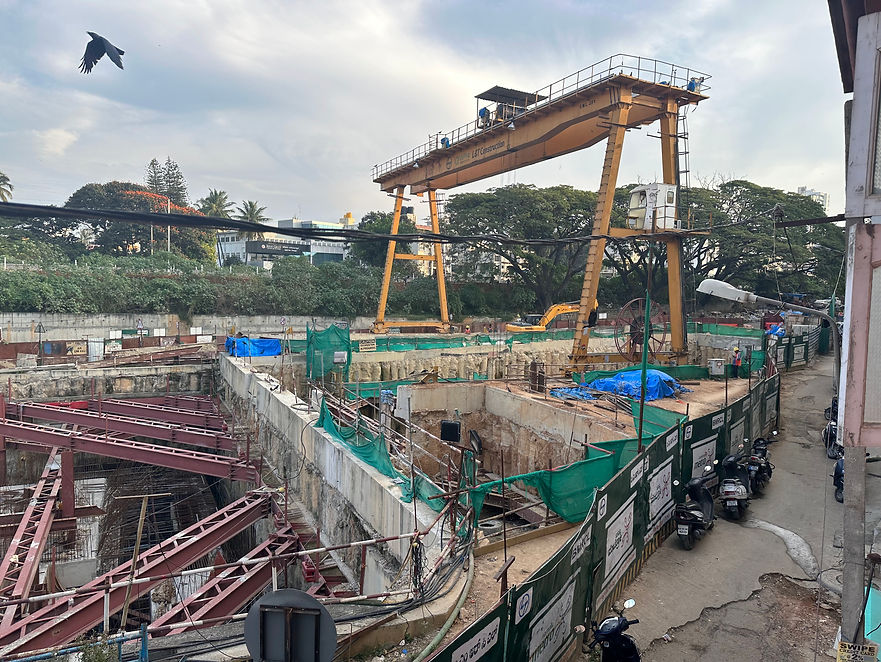
Some of the adults began going to the nearby cricket ground in the nearby Pulikeshi Nagar Ward’s East Football Ground. A part of the ground had a park with lush green trees where residents used to walk around without any restrictions, which is covered up by barricades now.
“Our friend groups have changed as there’s no place to play and we have to fix times amongst us to play.”
(Jasmine, 13, Resident)
Impact on Work and Livelihood Activities
Different narratives emerged around the impact of metro construction on the work activities and livelihood associated with the area that was taken up for the construction.
There was displacement of the street vendors and the sabzi mandi that used to be put up in front of the ground from where most of the families in the Pottery Town and Gandhi Grama neighbourhoods bought groceries from. This had a direct impact on their daily earnings with some of the vendors shifting their jobs to Ola and Uber drivers.
"Hamara sabji ka dhanda pehle ground ke aju baju wale road pe tha. Waha bada sabji mandi tha but metro ke wajah se poora chaupat ho gaya. 1200 se1300 pehle per day milta tha, abhi 400/500 hardly roj ka milta hai. Bohot sare sabji wale ola uber driver ban gaye is wajah se"
(Ahmed, 33, Resident)
For potter residents, the construction on the playground led to a loss of an open space that was used by them to store big pottery items which led to storage problems of their finished products and also led to a reduction in their overall supply of products.
"Ground hamare liye free storage space tha. Humare bohot sare artisans waha rakhate the, ab woh space nahi hai."
(Chandrashekhar, 54, Potter)
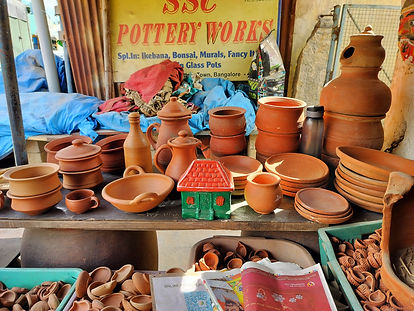
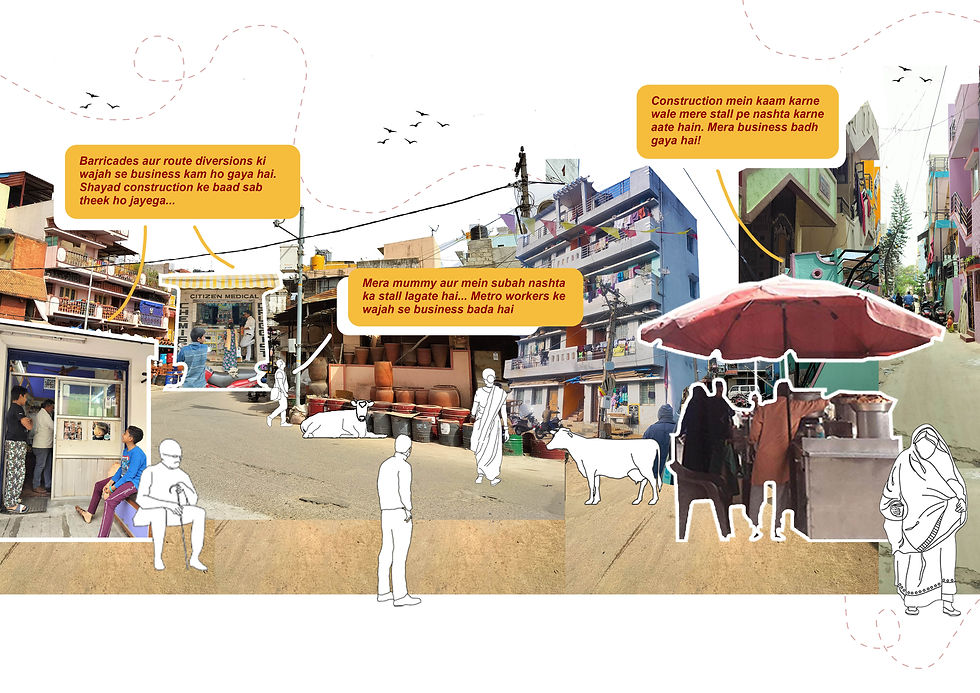
For local entrepreneurs, who already were facing a decrease in footfall after Covid, they had their daily customer base reduce further due to the lack of access and closing down of routes since the construction started.
"Ye jo road haina, wo close ho gaya to andar ke dukano pe asar hua hai business mai.. Mera bhi business kam hua hai, magar mera dukaan famous hai to mujhe itna farak nahi pada hai."
(Gafoor, 65, Runs a nano-enterprise)
However, some of the other residents and entrepreneurs saw an increase in customer base in the form of construction workers who were employed on the construction site and used to come eat at their nano enterprises and food stalls.
"Mera mummy aur mai subah nashta ka stall lagate hai metro workers ke wajah se bussiness badha hai"
(Chandrashekhar, 54, potter)
"Workers ke wajah se hi hamara bussiness badha hai. Iske bad hi hamane yaha thela dala."
(Kamala, 42, snack vendor)
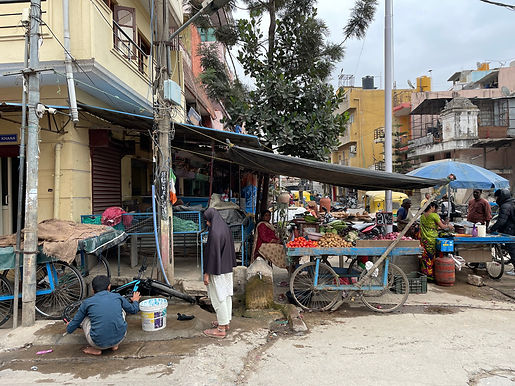
"Peeche ke ghar mein 10-15 aadmi hai bhaade mein, baad wali wo galli mein ek ek room mein 3-4 aadmi rehta. Ek aadmi, 5 aadmi raha toh 5000-6000 bhaada hai. Wo sab kaam karta na, raat mein aata aur sota hai, subah chala jata. 6 mahine mein badalta hai... Company se ghar le rakha hai, mazdoor akele nahi rehte, company advance deke bhaada deta hai. Aadha aadmi idhar hi rehte hai.
Ab zyaada aadmi metro wale ko bhaade pe [ghar] nahi de raha hai... Kyu kahe toh bolta 'thookta hai, paan daalta hai, supaari, ... haa gandagi karte hai, karta na, toh aadmi nahi de raha ghar. Ab dete hi nahi barabar, diya toh conditions 'thookna nahi' ... 'ye rakhna', pura khachra peeche ghar wale ne diya hai, wo gali mein 5-6 aadmi rehte hai"
(Parvati, 48, resident)